Binder Microbiological Incubators: Contributing to Contamination Control in Laboratories
In the laboratory, no matter how careful and meticulous the operator is, the risk of contamination during microbial culture remains very high. Improper handling often leads to contamination and the loss of reference strains. Therefore, clarifying methods for detecting contamination in microbial lines to prevent systematic errors is extremely crucial.
Contamination during microbiological culturing is very common in medical laboratories – including when purchased from third parties. In fact, many lab-cultured microbial strains become contaminated. Fungal spores can disperse and spread through the air. Mistakes easily occur due to laboratory technician handling.
Common contamination scenarios in laboratories
- Microbial contamination (bacteria, mycoplasma, fungi, yeasts, etc.)
- Viral contamination
- Protein contamination (prions)
- Chemical contamination (leachables and extractables from plastics, heavy metals, etc.)
- Cross-contamination with other microbial cultures
- …
Where do contamination sources come from and which sources need to be "cleaned"?
Problems often start with the initial raw materials. Even if every effort is made correctly during the process, contamination will still occur if the tools and initial materials used were not previously sterilized. Mycoplasmas risk passing through filters. And prions can even survive after sterilization at 121°C.
One of the main causes of contamination in the laboratory is the human body. Technicians should not work at the same time in the sterile work area, as this can easily cause cross-contamination. Liquids in this area must be treated to prevent contamination.
In addition, haste and rushing while working in a cleanroom should be avoided. Incubator doors must not be opened without good reason and certainly not kept open for too long. Technicians should not work with multiple microbial lines simultaneously.
Is laboratory equipment being used properly?
Laboratory equipment can also be a source of contamination. Therefore, pay attention to the following points:
- Use plastic containers that are free of plasticizers
- Choose a suitable location to place culture incubators (avoid placing them near sinks, where contamination can occur)
- When working with antibiotic-free lines, do not place them together with antibiotic-containing lines (as antibiotic lines will affect antibiotic-free ones)
What investigation methods can be performed when contamination occurs?
The worst thing about mycoplasma contamination is that it often goes undetected for long periods. In principle, contamination events can be controlled and monitored using various methods, some of which are very complex while others are simpler.
- An experienced laboratory technician can recognize that cross-contamination has occurred simply by looking through a microscope.
- If all DNA is extracted from the culture, the PCR method can be used to detect mycoplasma DNA content.
- Laboratories manufacturing drugs for novel therapies should test for bacteria, spores, fungi, and mycoplasma.
How to handle contamination?
Each contamination case must be documented and categorized.
Special cleaning measures must be taken. In case of fungal contamination, check whether the laboratory is regularly disinfected with alcohol-based agents.
- As a basic rule, regularly wiping and disinfecting the incubator interior with alcohol helps prevent contamination.
- In many laboratories, monthly hot air sterilization is required according to medical practice standards.
- In rare cases, antibiotics must be used to eliminate bacteria; among all methods, this is the most expensive—and naturally, all other samples in the incubator must be discarded and everything restarted from scratch.
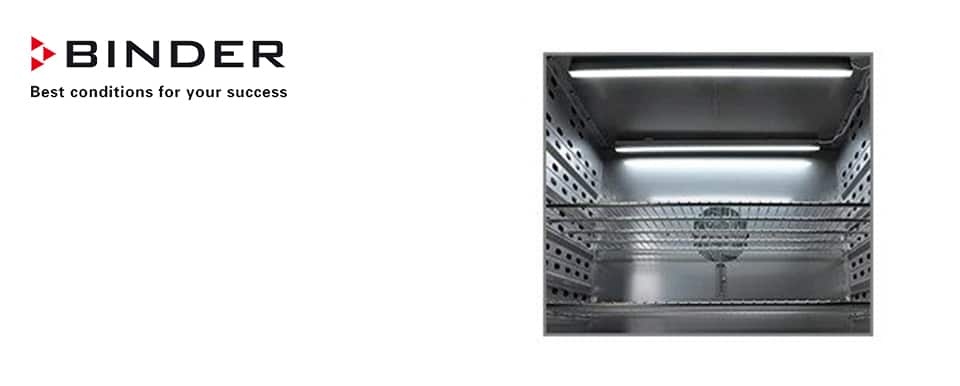
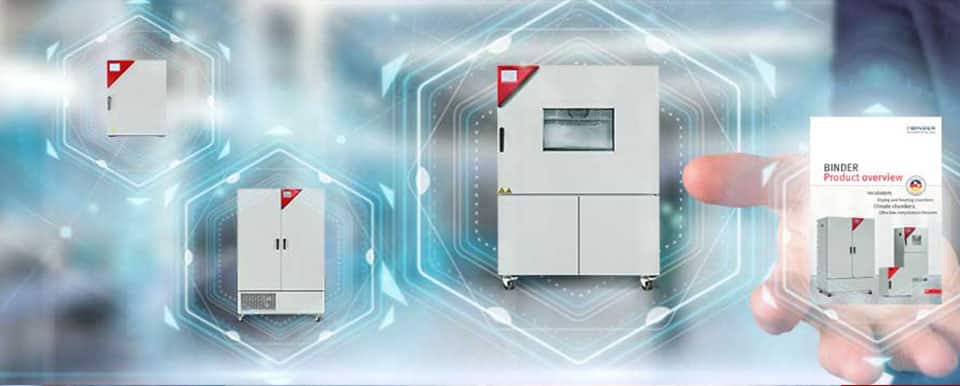
Continuous process monitoring, detection, verification, and contamination control are critical, especially for laboratories working with highly sensitive microorganisms without antibiotics. Incubators remain the safest equipment throughout the entire workflow. Binder incubators feature an easy-to-clean design for shelves and chambers, along with an inner glass door for easy observation while minimizing cross-contamination between the interior and ambient environments. Two top and bottom door latches ensure a tighter seal, effectively preventing contamination. Binder incubators come in a wide range of models to suit diverse application needs.
- Natural convection incubators: B 28, BD 23, BD 56, BD 115, BD 260, BD 400, BD 720
- Solid.Line natural convection incubators: BD S 56, BD S 115
- Forced convection incubators: BF 56, BF 115, BF 260, BF 400, BF 720
- Cooling incubators: KT 53, KT 115, KT 170
- Cooling incubators with sub-zero temperatures: KB 23, KB 53, KB 115, KB 240, KB 400, KB 720